The TV interface
Hardware, packaging & setup
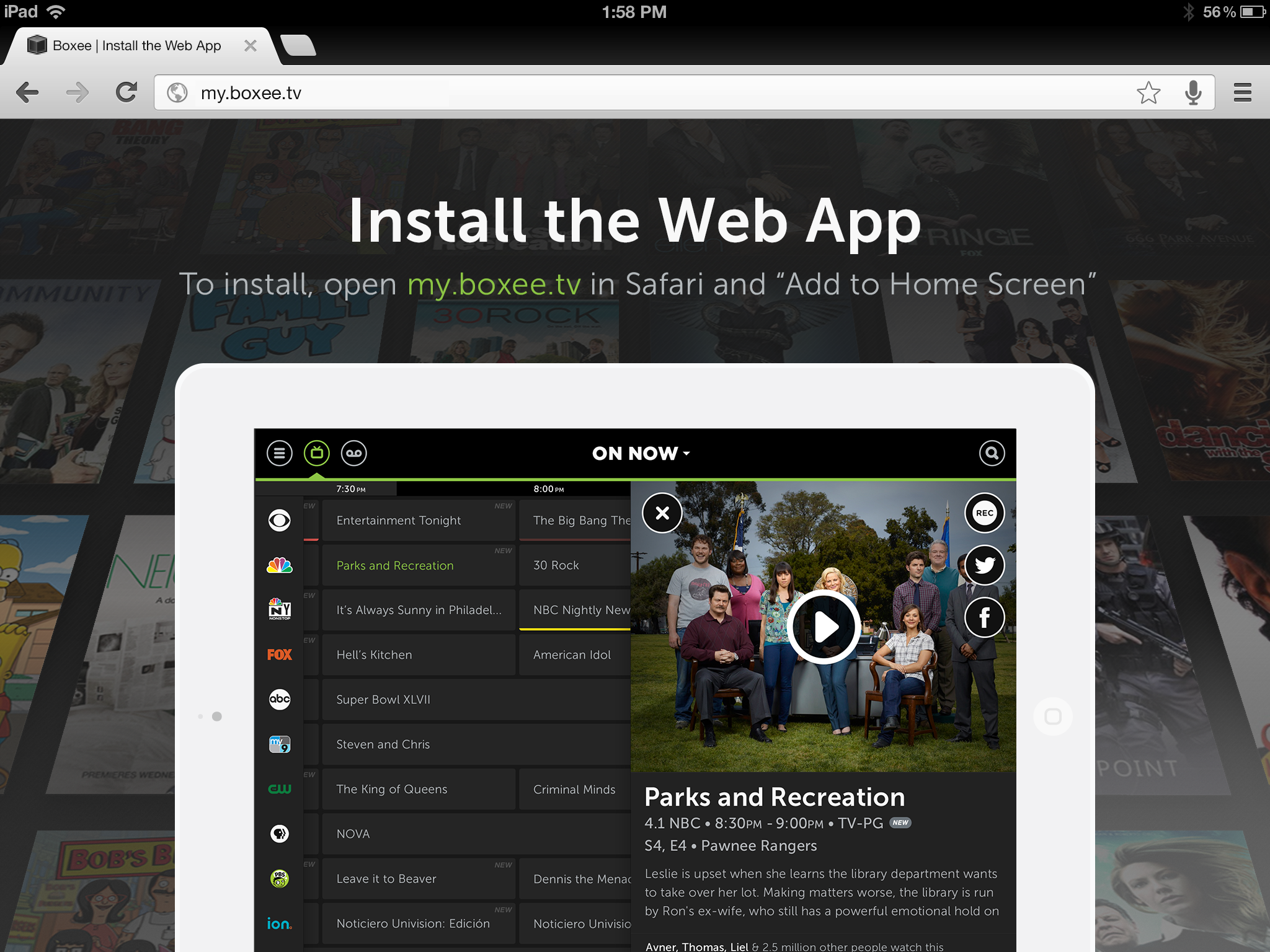
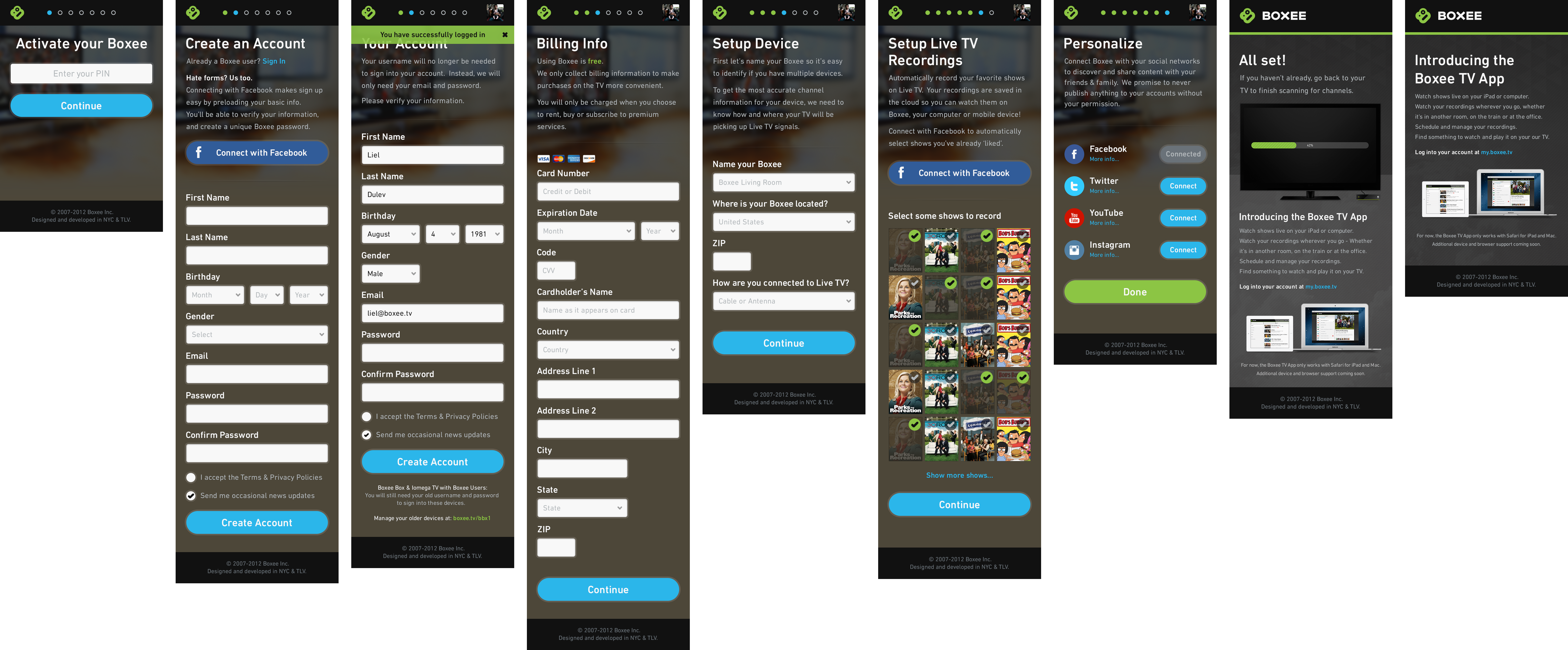
Companion apps
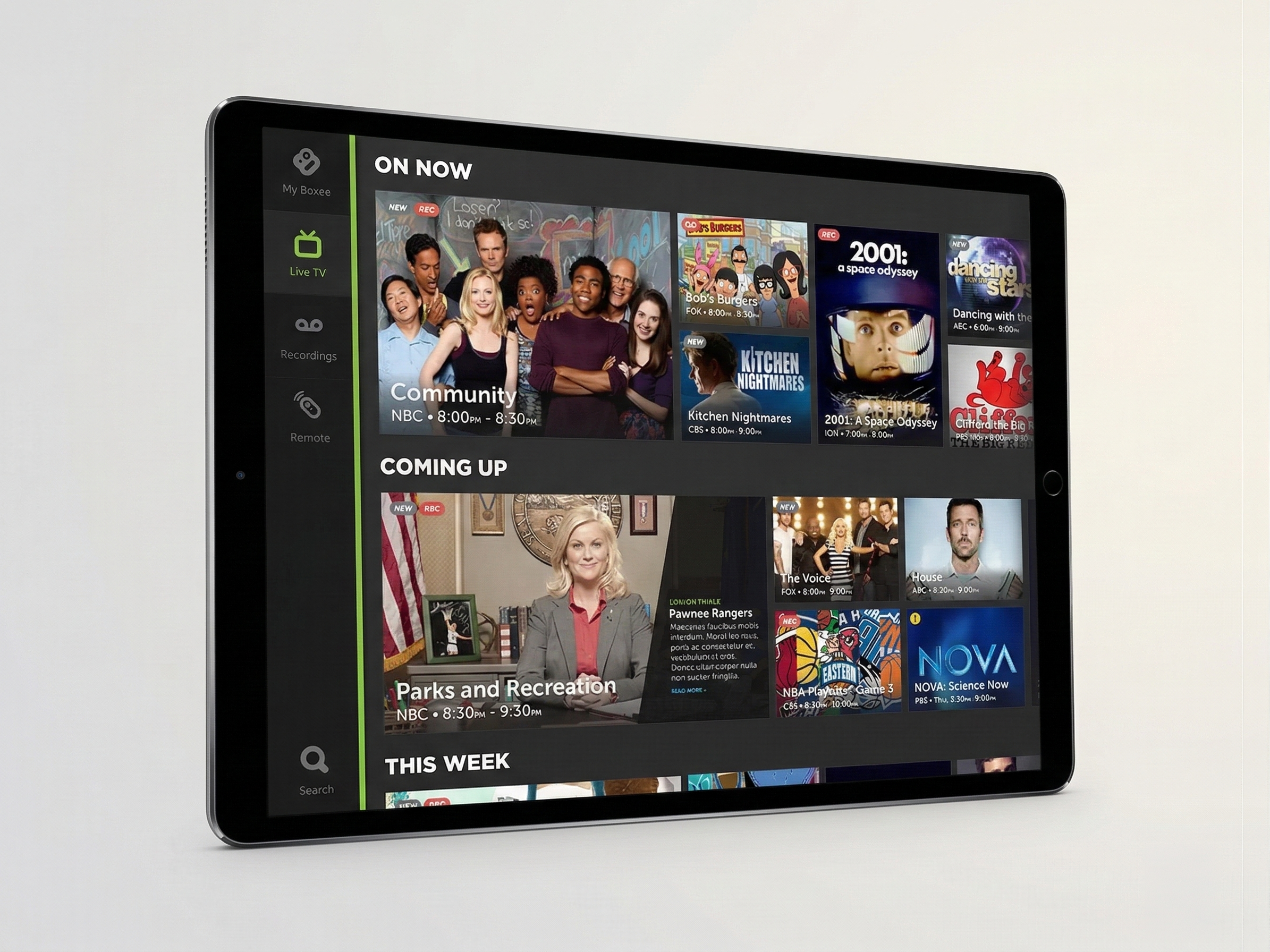
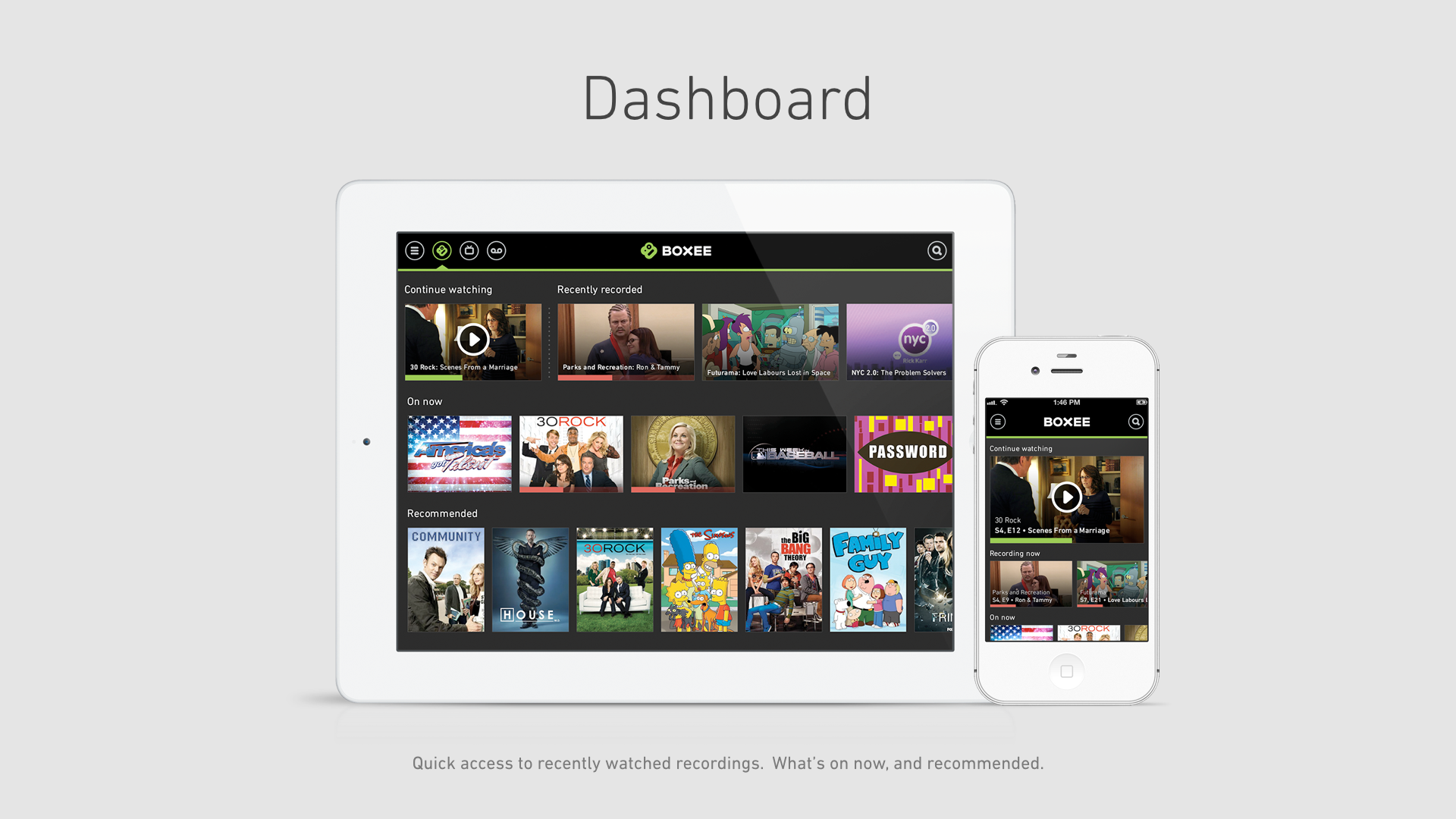
Boxee was one of the first consumer products to put streaming video on a TV. I designed the Cloud DVR, social TV features, and 10-foot UI, then carried that work into Samsung's Smart TV platform after the acquisition.
Everything I'd learned about designing for the web had to be unlearned. The living room has its own physics: a remote control, not a mouse. A couch, not a desk. Shared attention, not full focus. Every interaction model changes.
Every pattern had to be figured out from scratch. There were no established conventions for TV app design in 2010. No tvOS Human Interface Guidelines, no Android TV patterns. We were making it up as we went.
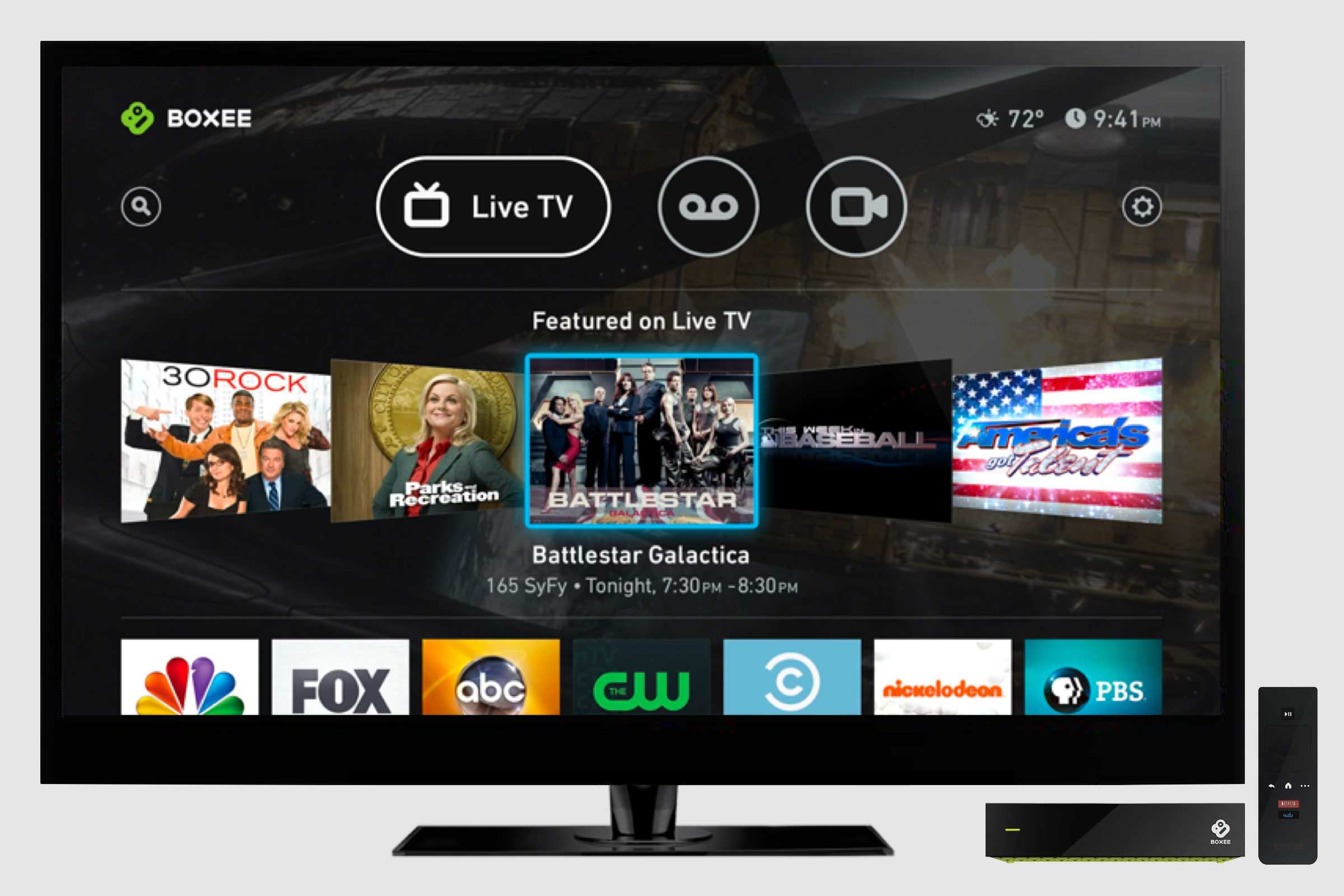
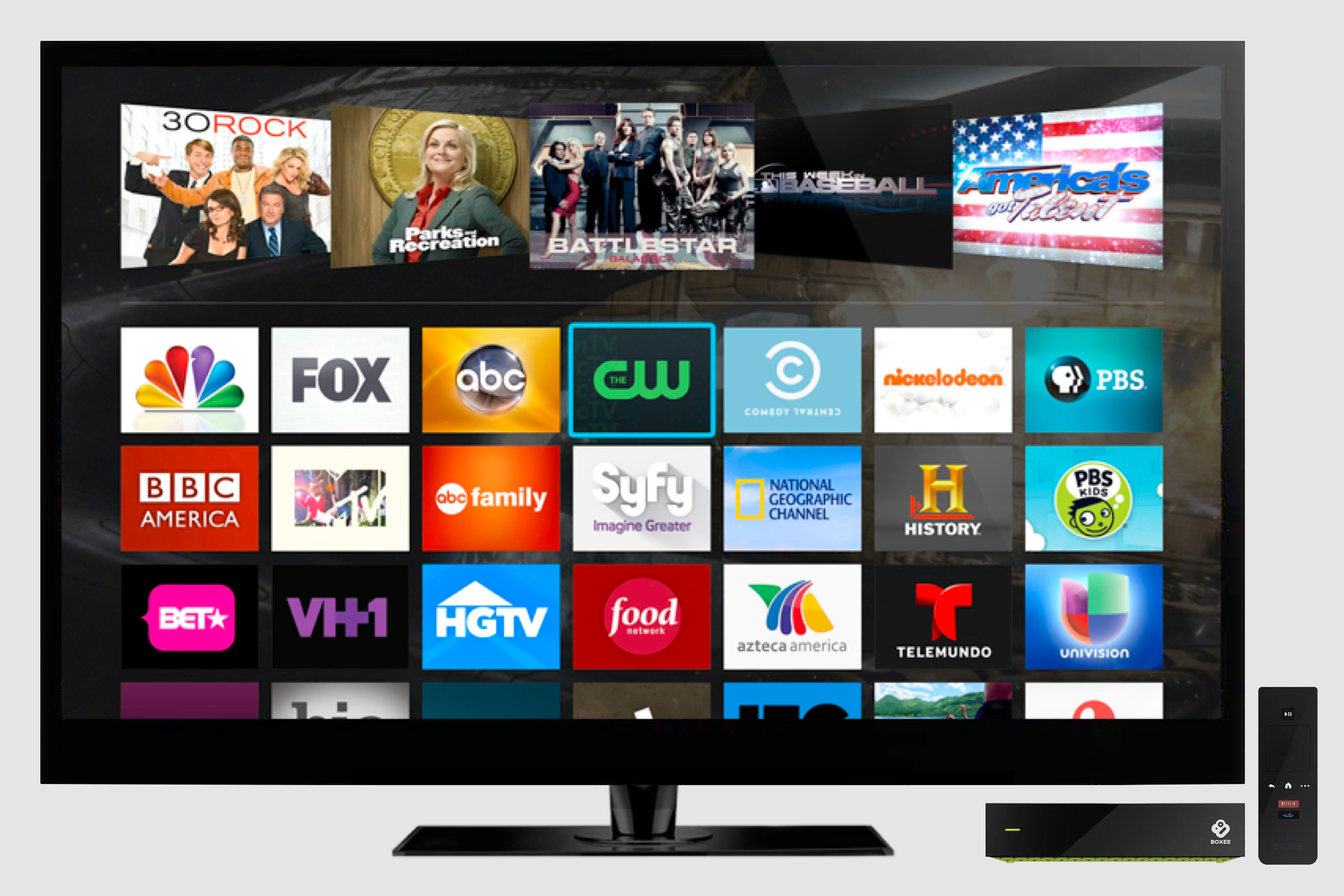
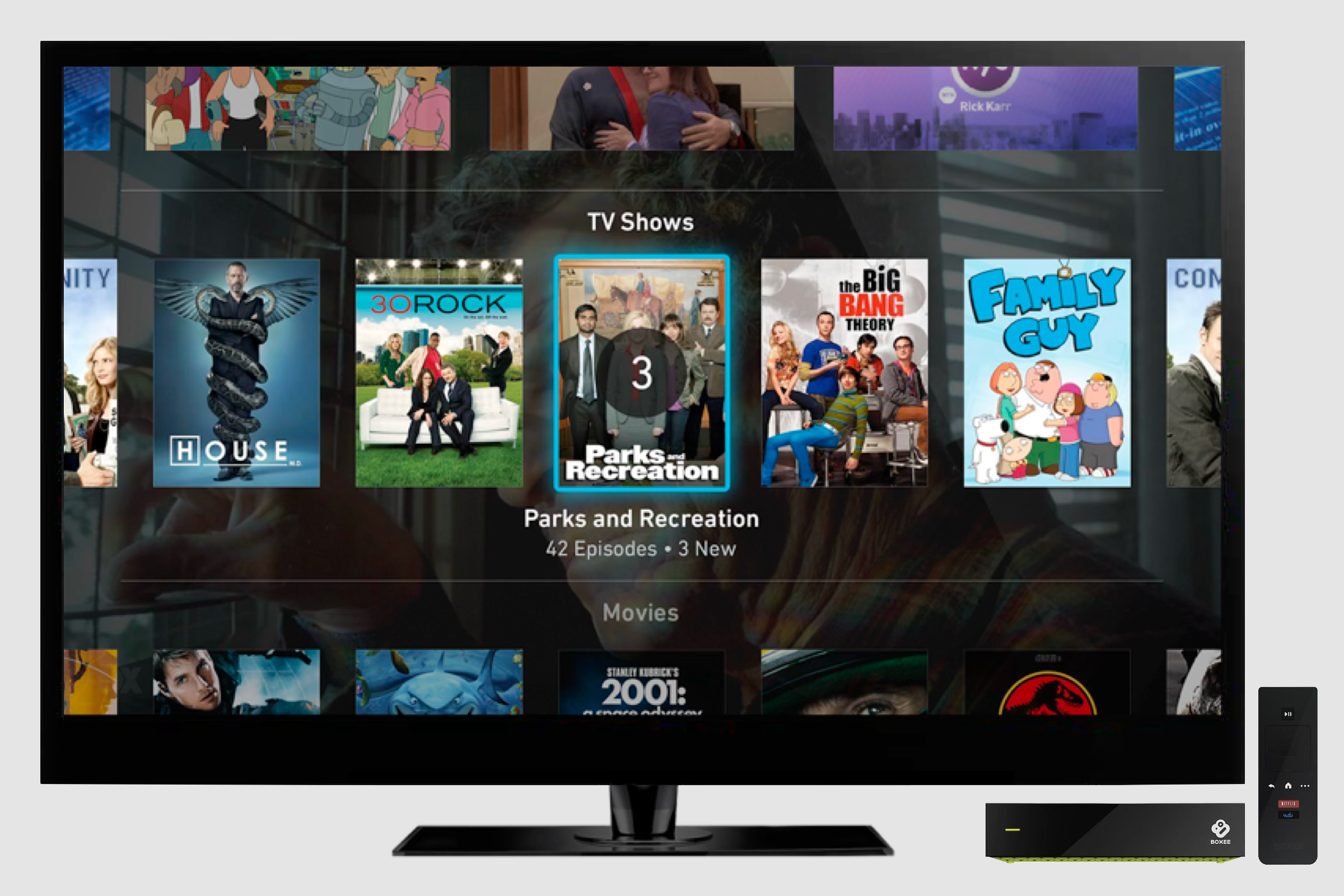
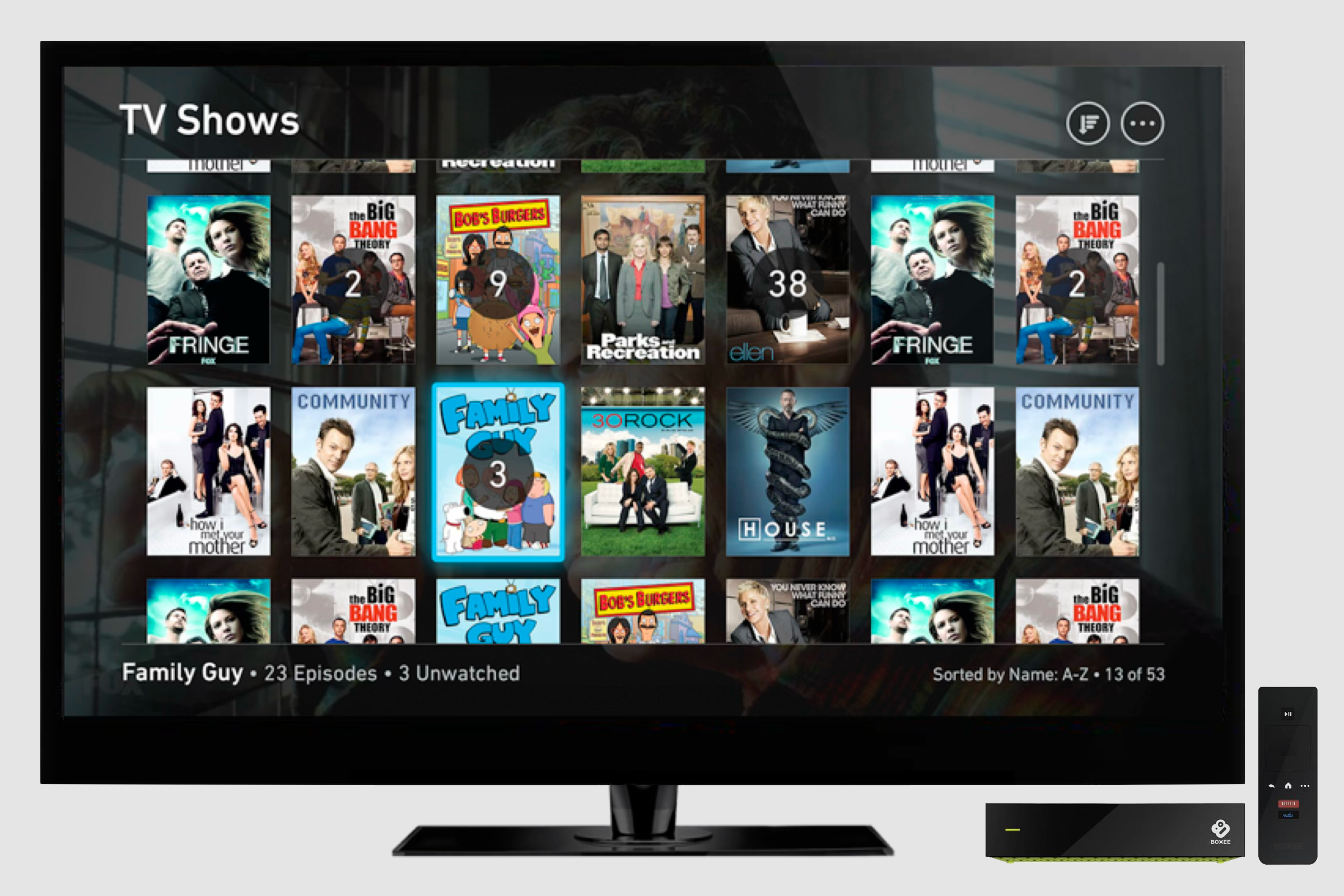
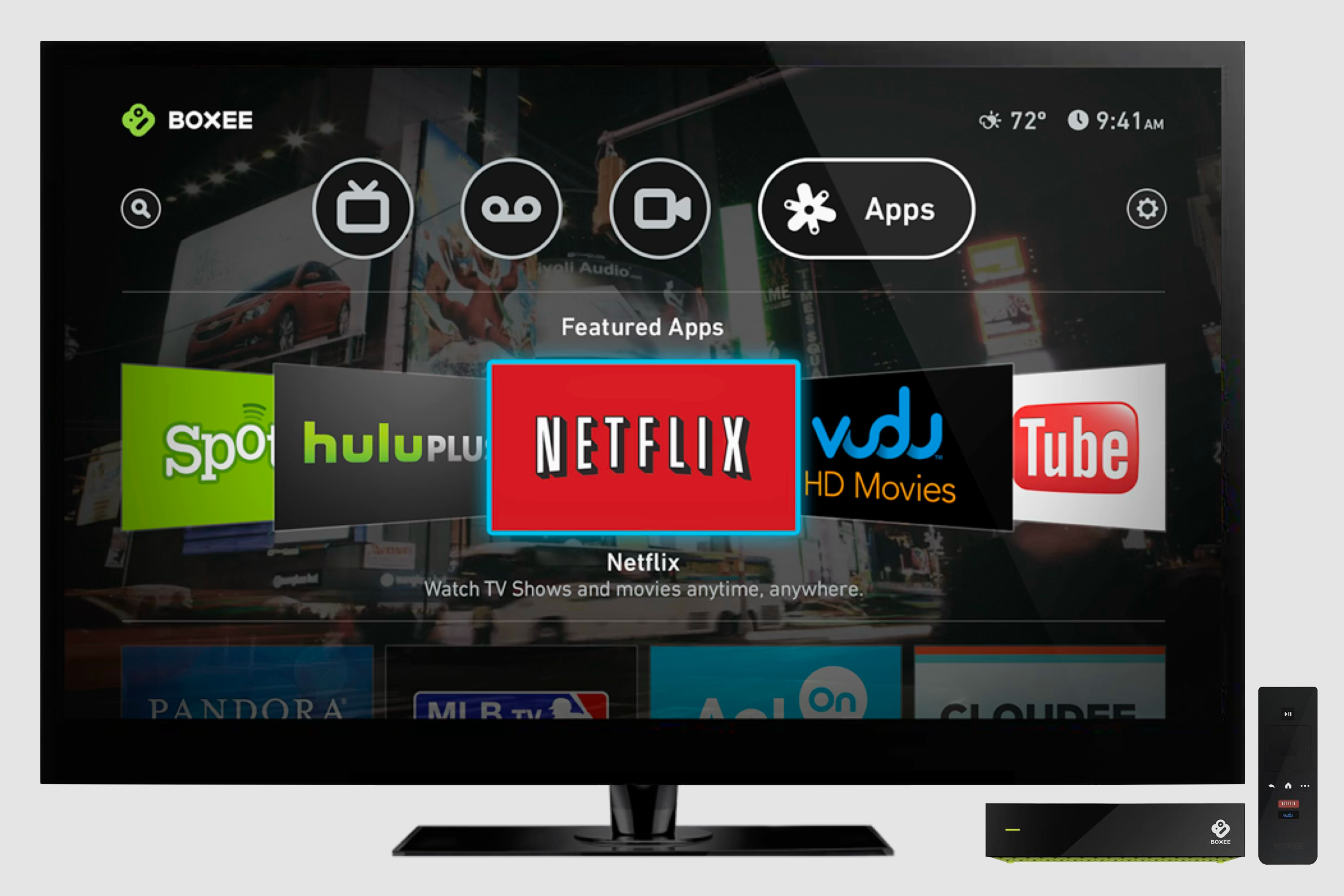
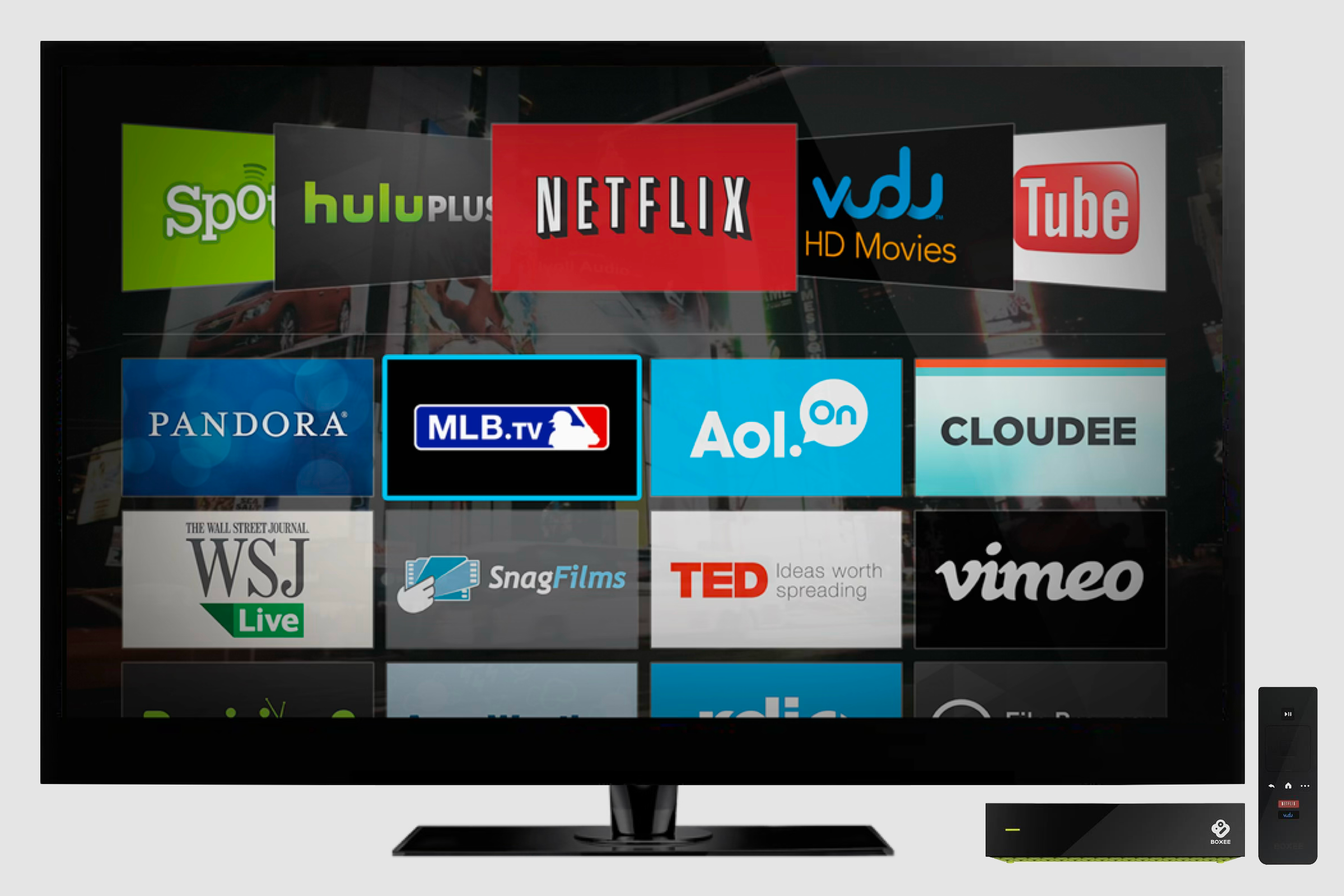
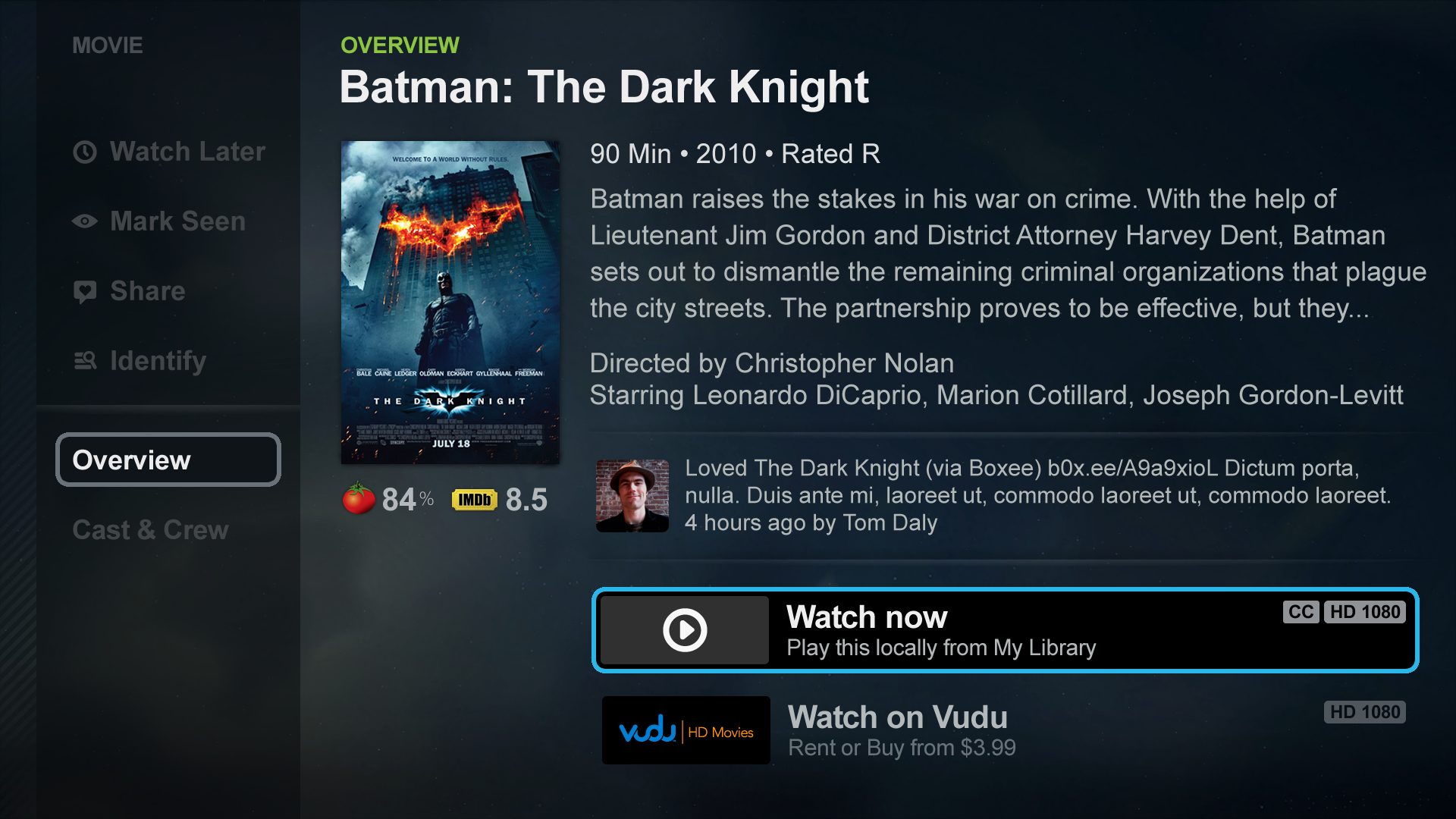
Horizontal carousels navigated with left/right D-pad. Each rail represents a content category. Focus scales the selected poster to signal selection — no underline, no cursor, just spatial emphasis.
Navigation paradigmWithout a cursor, focus state is the entire interface. We designed a consistent focus language: scale + glow for content items, highlight + border for controls, breadcrumb trail for spatial orientation.
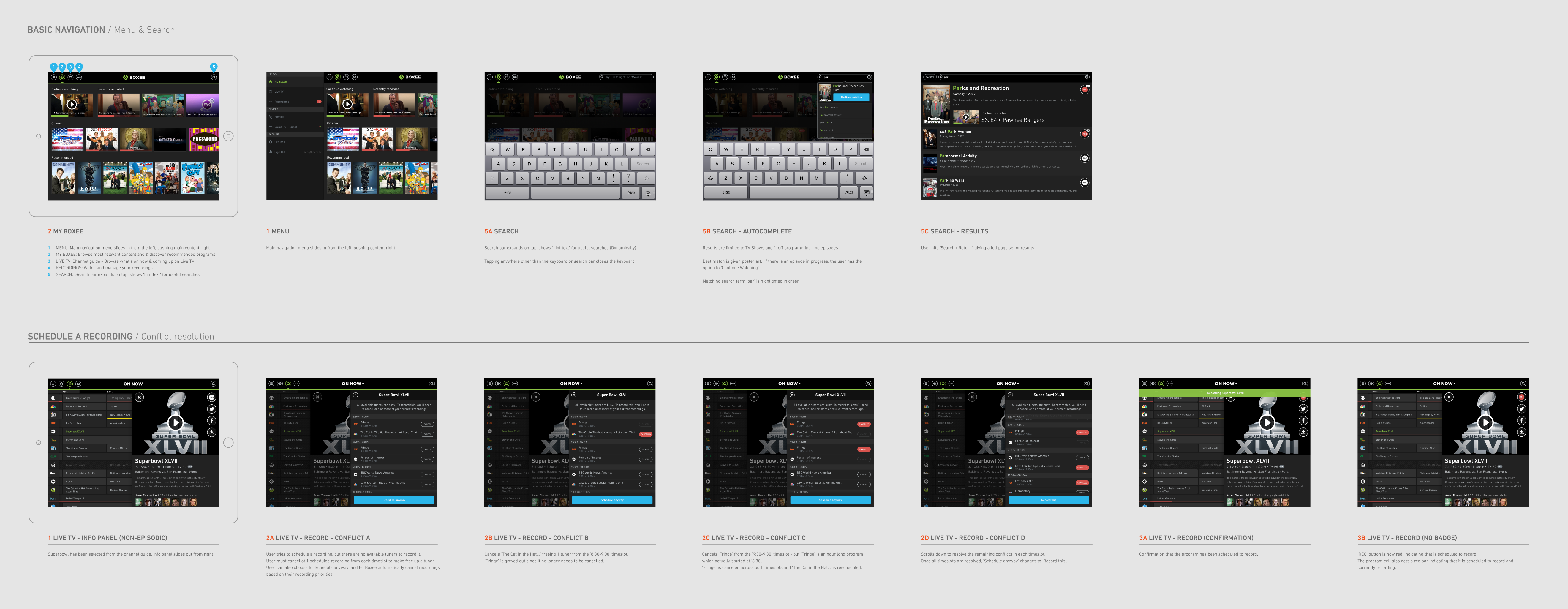
Core interactionRecording live TV from the guide: one-press record, series scheduling, conflict resolution. Every flow had to work with just a remote — no forms, no text input, minimal cognitive load.
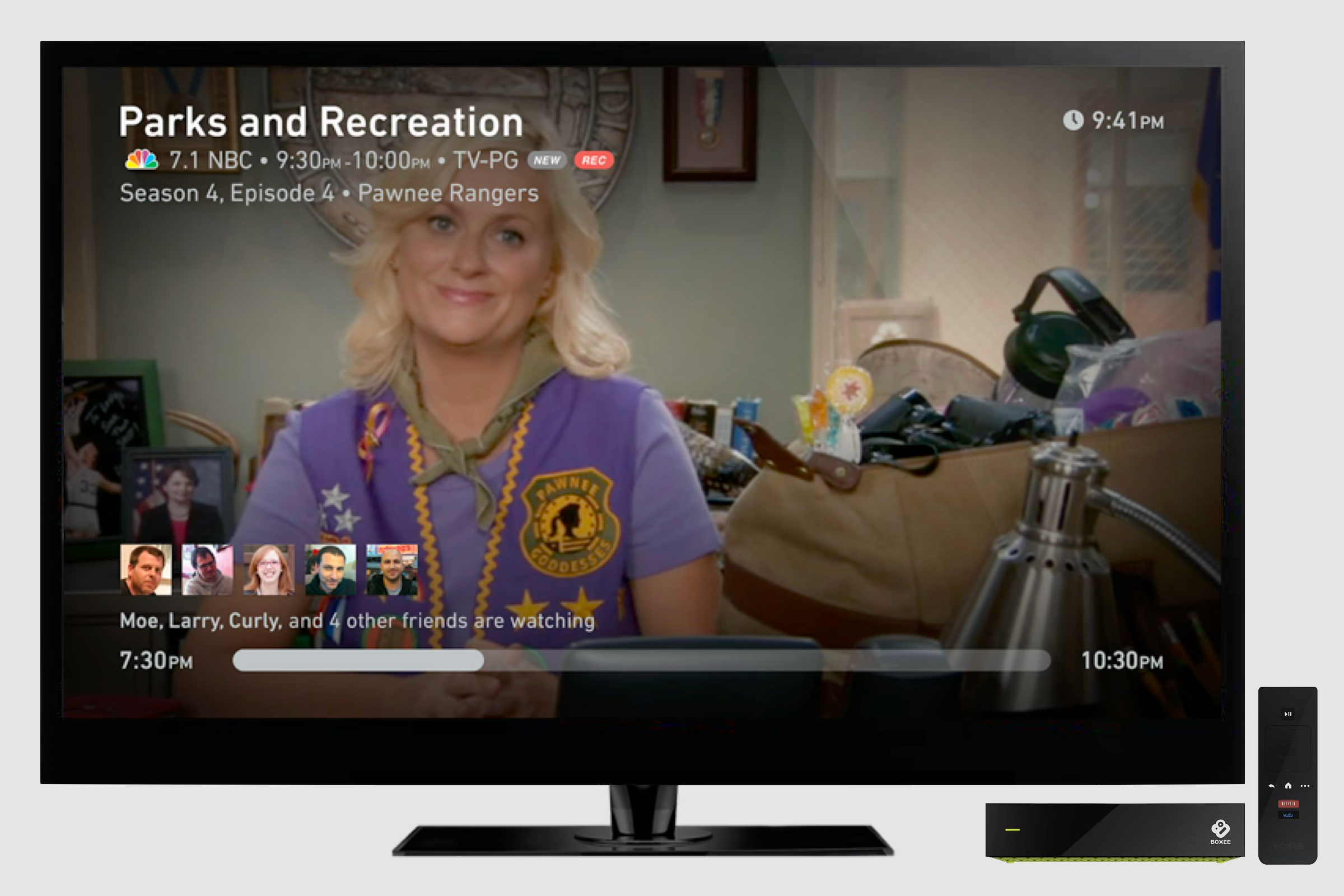
0→1 featureA persistent sidebar showing what friends were watching — real-time presence in the living room. Designed to be glanceable and non-intrusive during active viewing.
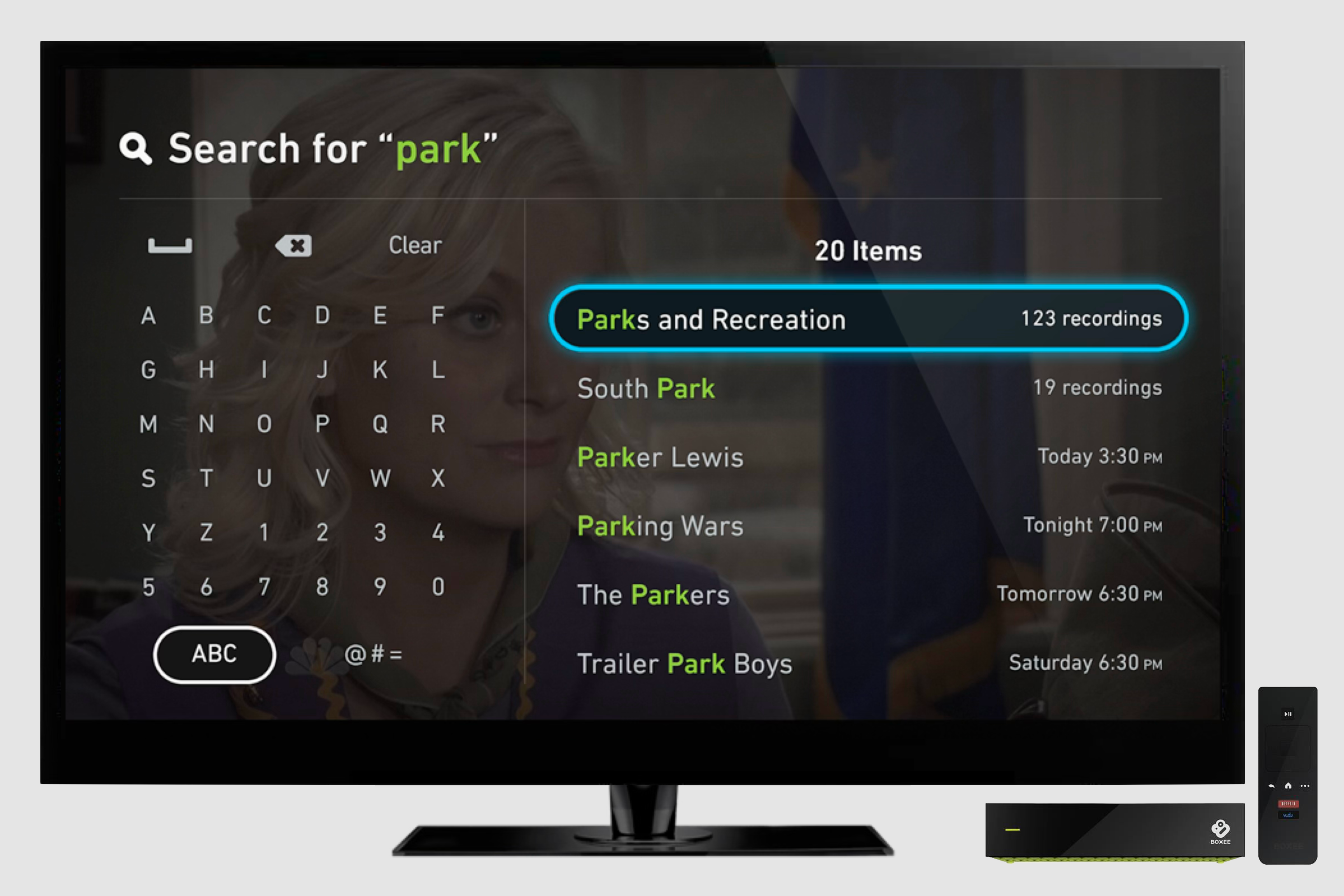
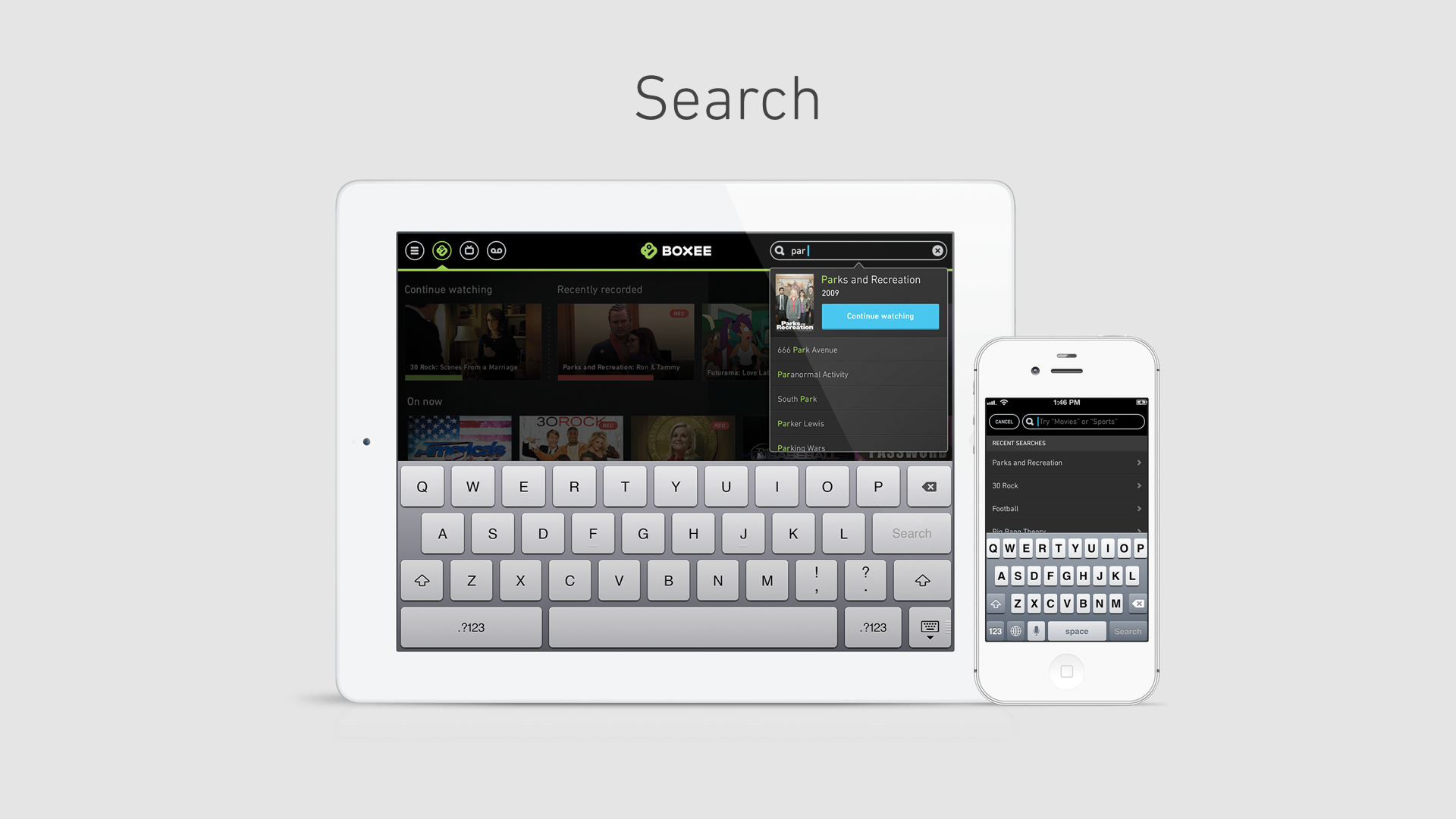
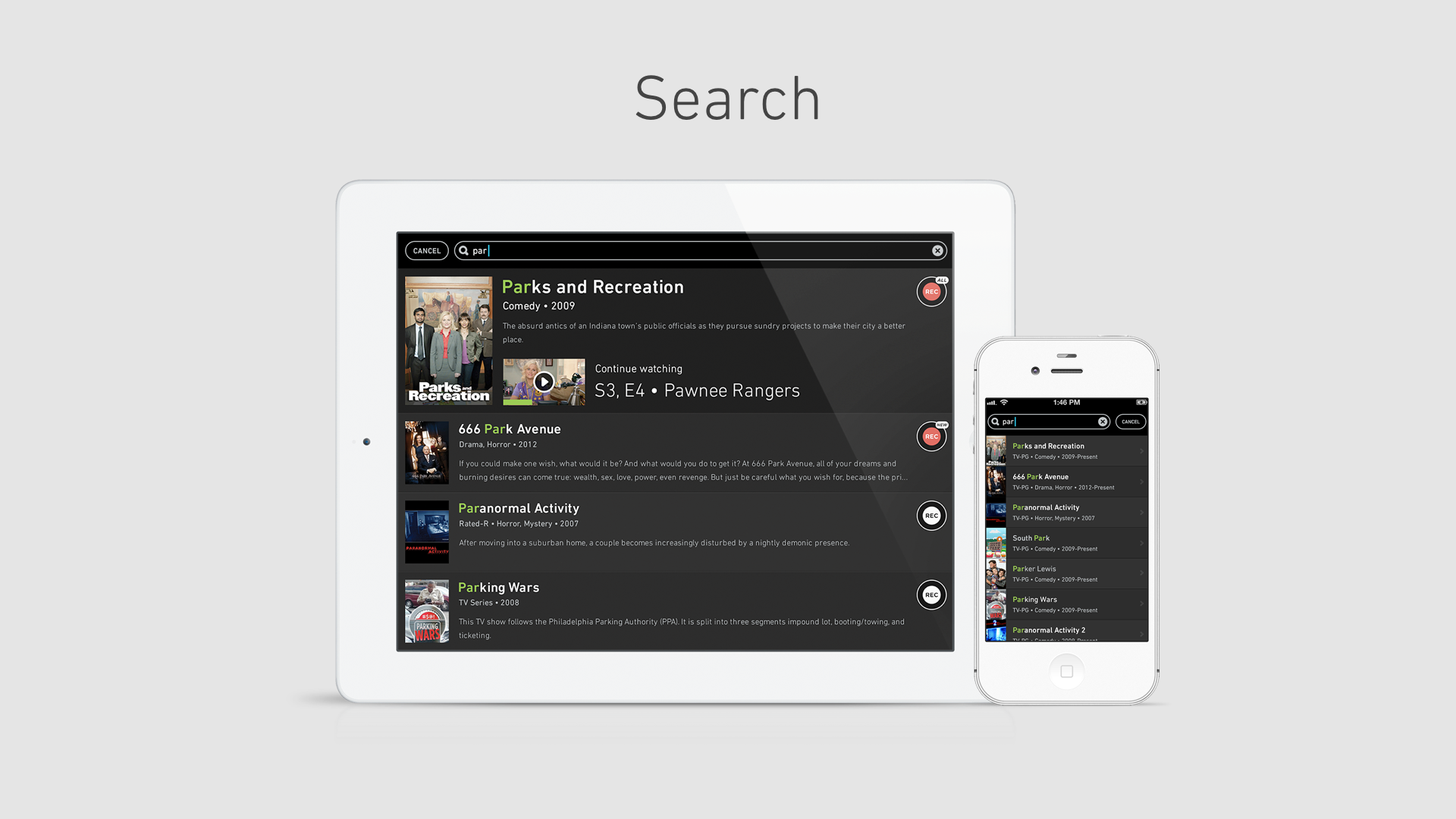
Social featureSearch on a TV is painful. I designed a predictive search interface for the QWERTY keyboard on the back of Boxee's remote, reducing keystrokes through smart suggestions.
Input optimizationPosters, thumbnails, and hero images do the talking — not labels. The UI gets out of the way so content occupies 80%+ of the viewport. Chrome is minimal.
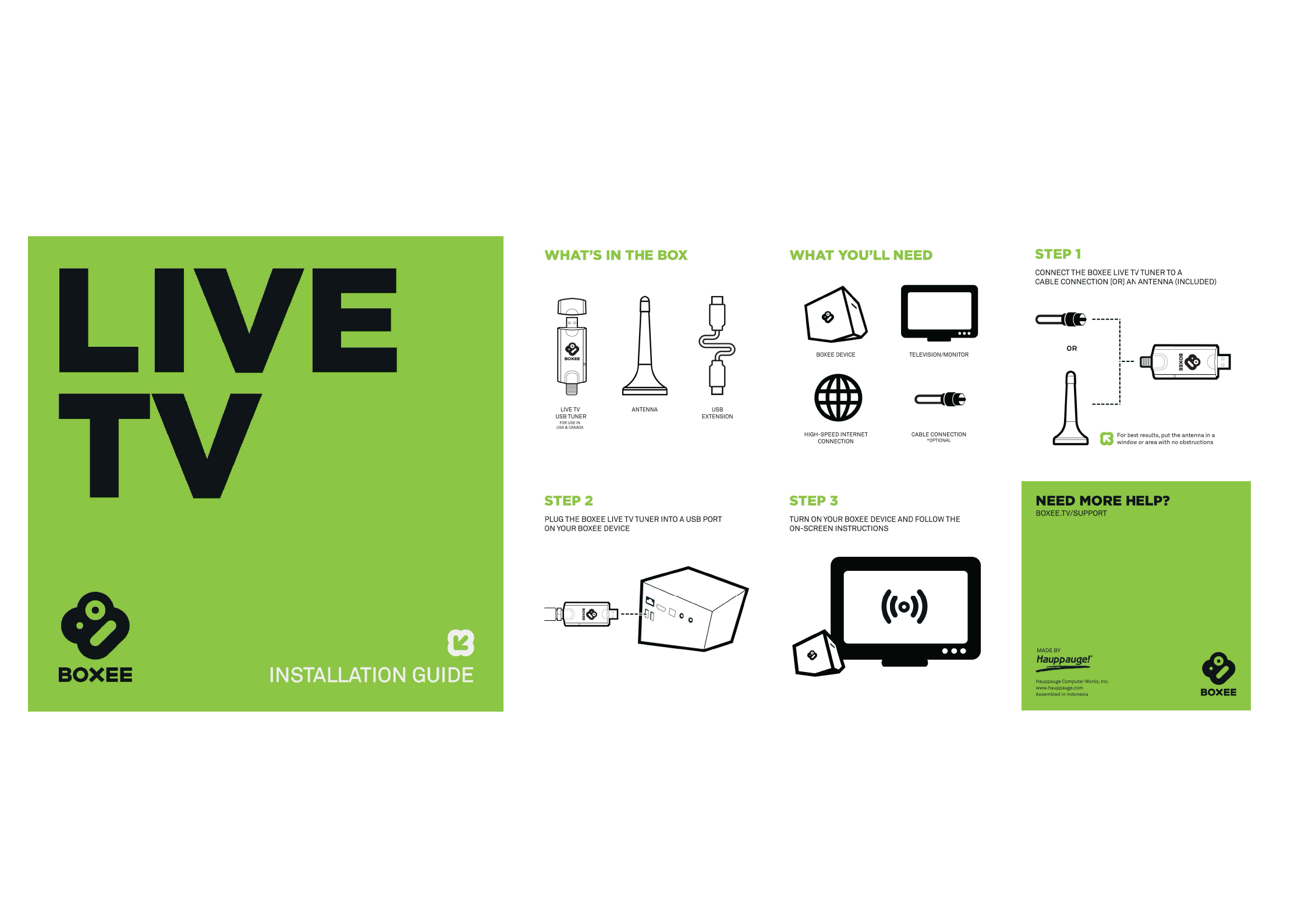
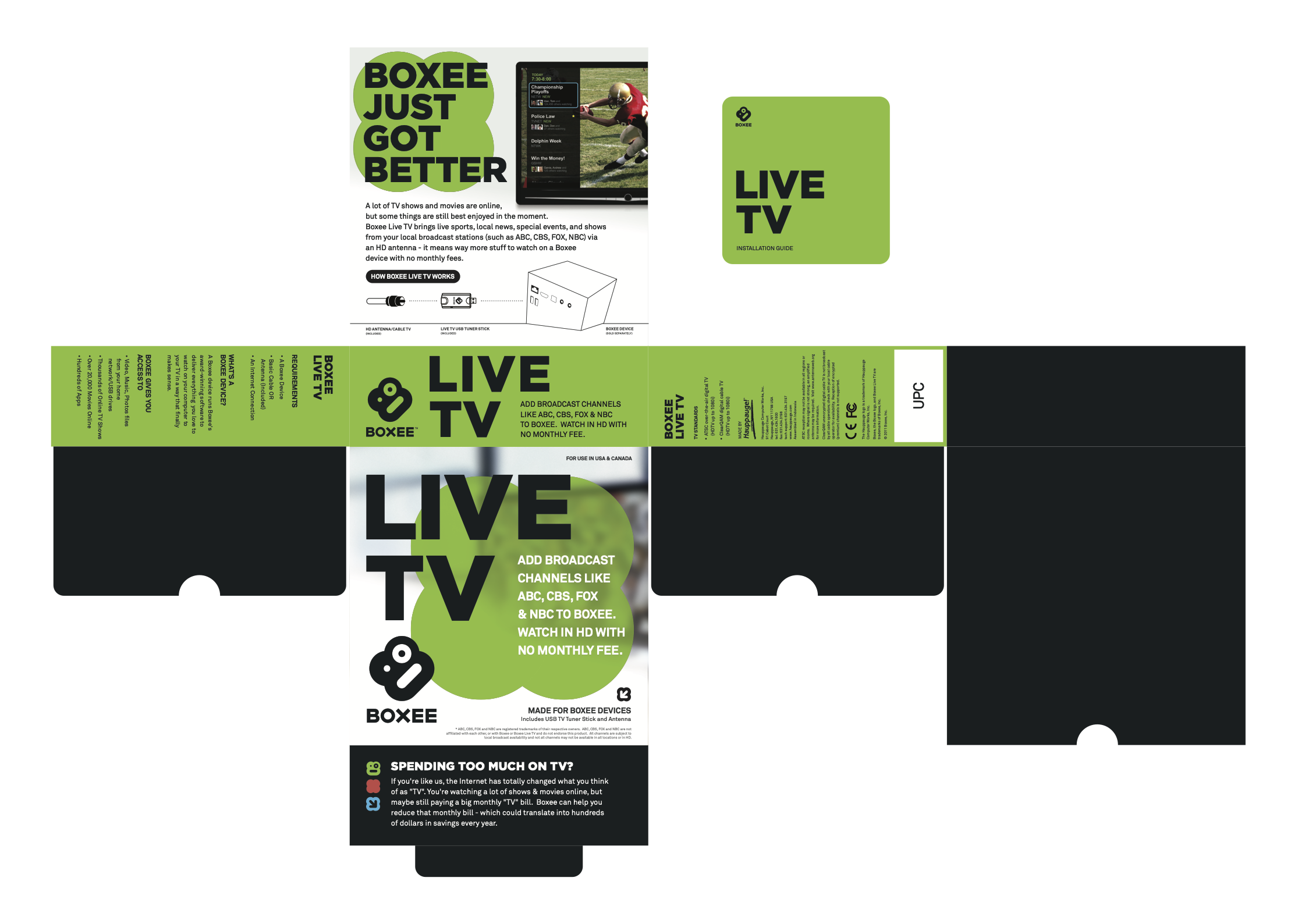
Visual designUnlike a web app, you can't hotfix a TV product once it's in someone's living room. Every design decision carried the weight of physical manufacturing. Packaging, unboxing, setup, firmware updates: all part of the design surface.
The time from opening the box to watching something had to be under 5 minutes. I designed the OOBE (out-of-box experience) to guide users through Wi-Fi setup, account creation, and content discovery with minimal text input.
Contributed to the industrial design of Boxee's remote, a dual-sided device with a classic D-pad on the front and a full QWERTY keyboard on the back. The UI adapted to whichever input the user was currently using.
Embedded hardware with limited RAM and CPU. Animations had to be GPU-composited. Image loading had to be predictive. Every screen had a performance budget that directly impacted design decisions.
Designed update flows that conveyed progress and urgency without alarming users. A failed firmware update bricks the device, so the stakes were higher than anything I'd worked on before.
When Samsung acquired Boxee in 2013, I stayed with the product. For two years I worked in Samsung's R&D lab in New York, integrating Boxee's software into Samsung's Smart TV platform and contributing to next-gen consumer electronics design.
At Boxee, we controlled the entire stack — hardware, OS, and app. At Samsung, I was designing for millions of devices across dozens of markets. Every decision had to pass through localization, accessibility, and hardware compatibility reviews.
I learned a lot about keeping design quality high inside a massive consumer electronics organization, and about what it means to balance creative ambition with manufacturing reality.
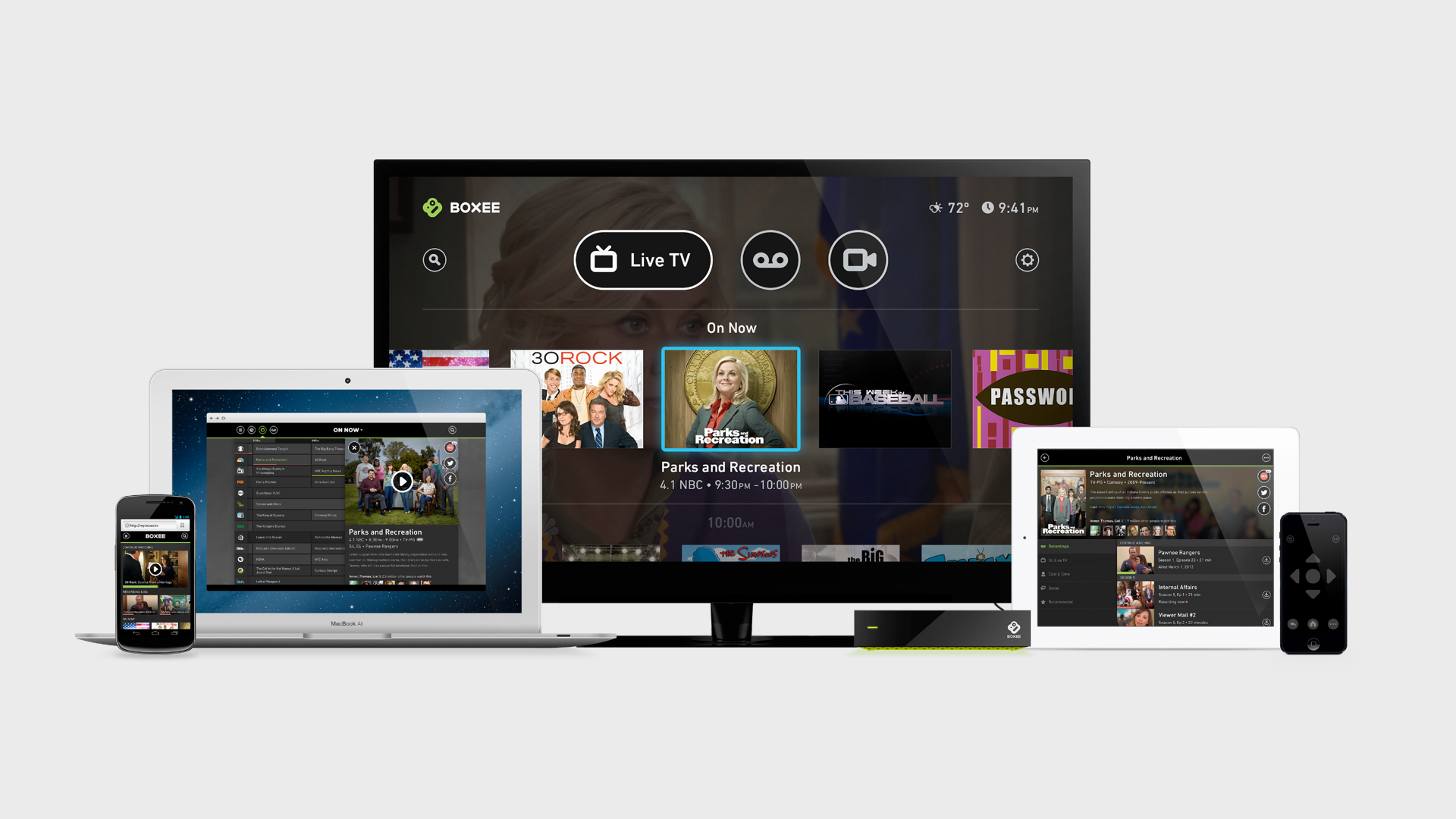
Designed companion app interactions between Samsung phones and TVs — second-screen content browsing, remote control app, and cross-device handoff.
Contributed to the design of Samsung's Smart TV remote — simplifying the button layout while maintaining access to core navigation patterns.
Helped integrate Boxee's content aggregation into Samsung's Tizen-based Smart TV interface, adapting our patterns for Samsung's design language.
Figuring out 10-foot UI patterns from scratch gave me an intuition for living-room design that I've carried through every role since. Every TV project at Vimeo built on this foundation.
I'd push harder for user research early on. We relied heavily on internal intuition for the DVR flows — testing with real TV viewers earlier would have surfaced scheduling edge cases faster.
Consumer electronics design is designing for commitment. Users live with your decisions every day. A web app can iterate in sprints. A TV in someone's living room is there for years. That kind of weight makes you more careful.